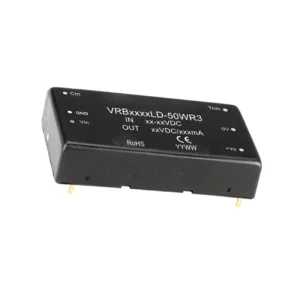
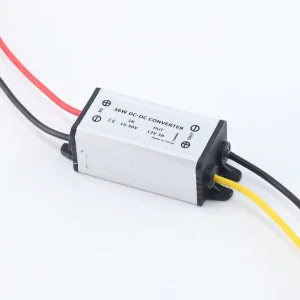
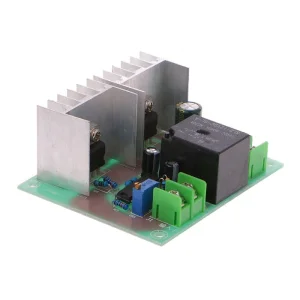
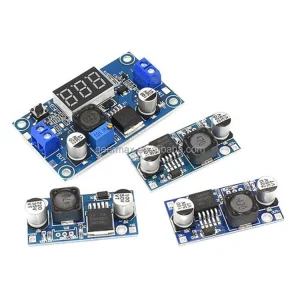
Explore our premium range of industrial, automotive, and board-mount DC-DC converter modules engineered for high operational dependability and thermal robustness.
An in-depth analysis of high-voltage vehicle architectures, wide bandgap semiconductors, and modular topology dynamics.
The global power electronics sector is experiencing a monumental shift driven by the twin mandates of high energy efficiency and compact integration. Historically, silicon-based power MOSFETs and IGBTs dictated the limits of switching frequencies and thermal density. Today, the commercialization of wide bandgap (WBG) semiconductors—primarily Silicon Carbide (SiC) and Gallium Nitride (GaN)—has fundamentally rewritten engineering parameters.
By supporting switching frequencies that are order of magnitude higher than traditional silicon, WBG-based DC-DC converters allow engineers to minimize the size of passive components, such as inductors and capacitors. The reduction in electromagnetic component volumes yields significant weight and volume savings, which is directly applicable to automotive electric drivetrain systems.
Furthermore, the transition from unilateral to bidirectional DC-DC conversion is becoming mainstream. Bidirectional topologies (such as Dual Active Bridge - DAB, and CLLC resonant configurations) facilitate two-way energy transfer between high-voltage traction batteries and low-voltage auxiliary systems. This capability is crucial for implementing Vehicle-to-Grid (V2G), Vehicle-to-Load (V2L), and redundant backup power architectures in commercial and off-road industrial machinery.
As passenger and utility EVs shift from standard 400V battery architectures to 800V configurations to support ultra-fast charging, DC-DC converter designs must adapt. High insulation safety, clearance/creepage management, and minimized electromagnetic interference (EMI) levels under high dV/dt transient states are now the benchmark requirements for industrial tier-1 suppliers.
For supply chain directors and hardware engineers, procurement goes beyond unit price. The assessment metrics for modern power modules focus on long-term reliability and ruggedness. Essential validation checkpoints include:
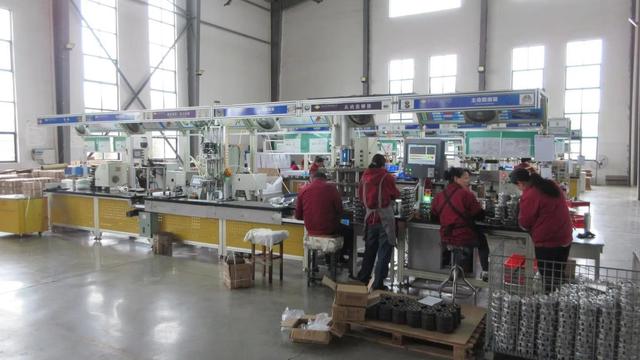
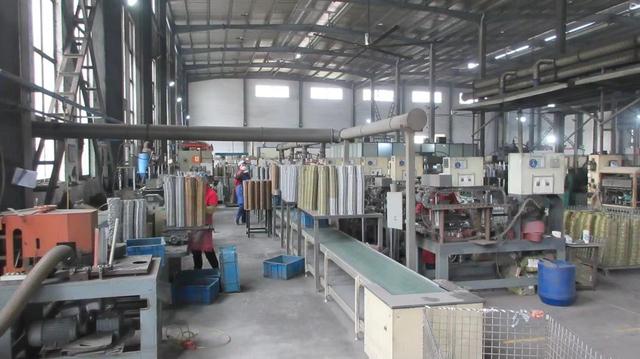
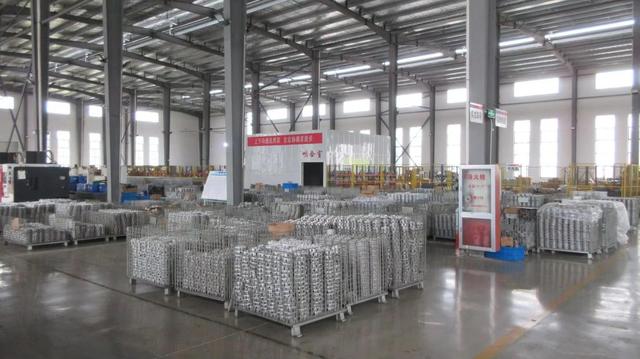
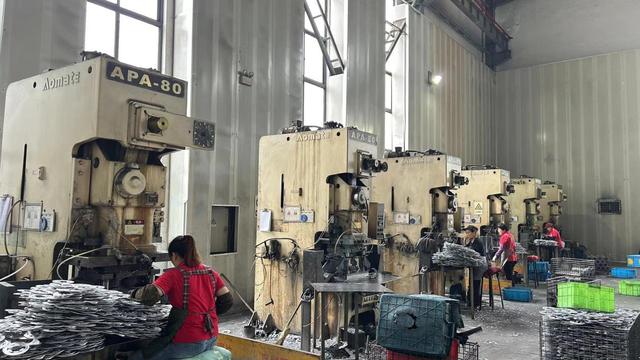
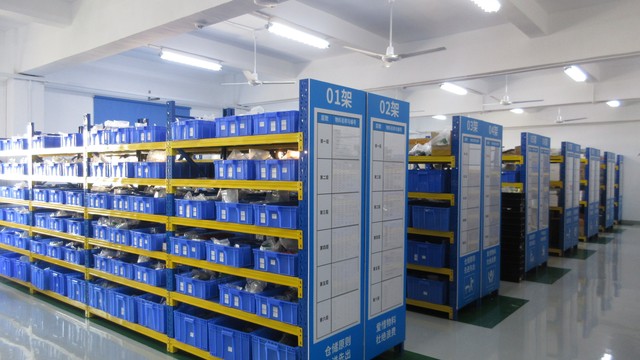
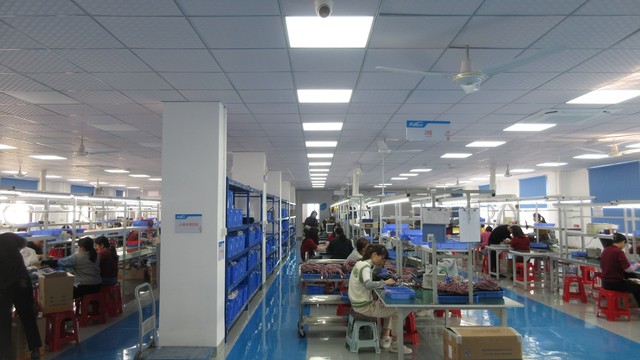
Operating a state-of-the-art 28,000 square meter facility utilizing Factory 4.0 automation and rigorous validation protocols.
Established in 2014 and headquartered in the high-tech hub of Shenzhen, Guangdong Province, Shenzhen DCI Autos Co., Ltd. is a leading manufacturer specializing in electric vehicle components, high-voltage assemblies, and power conversion systems. Our modern production footprint spans 28,000 square meters and is backed by over 300 highly skilled employees, including an R&D engineering division dedicated to advanced mobility technology.
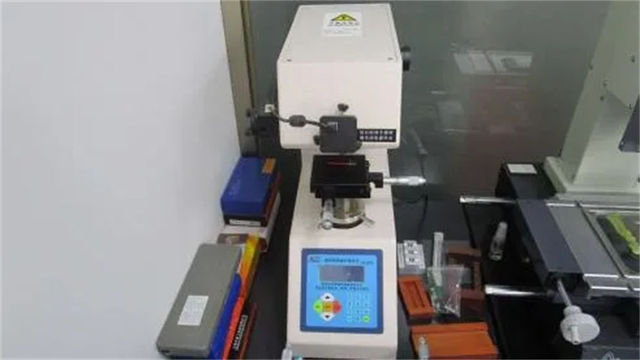
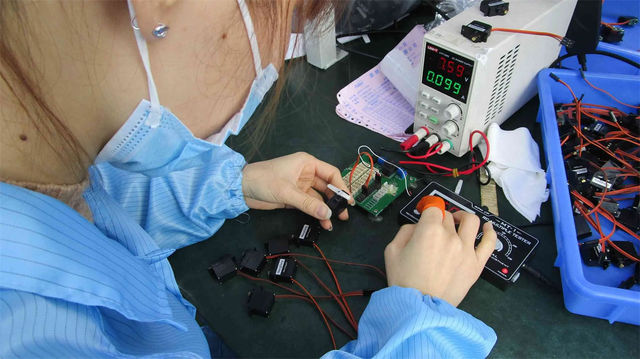
DCI Autos' production infrastructure features automated high-speed Surface Mount Technology (SMT) lines, automatic optical inspection (AOI), selective wave soldering, and automated end-of-line (EOL) testing setups. Our vertical integration strategy ensures that battery systems, power electronics (such as advanced DC-DC converters), battery management systems (BMS), charging controllers, and thermal management units are developed under a unified quality architecture.
By leveraging Shenzhen's unparalleled electronic manufacturing supply chain, DCI Autos guarantees raw material procurement efficiency, fast prototyping, and high component traceability. This local clustering minimizes production lead times and insulates international partners from global shipping disruptions.

From vehicle-mounted auxiliary power units to marine propulsion and micro-board regulation systems.
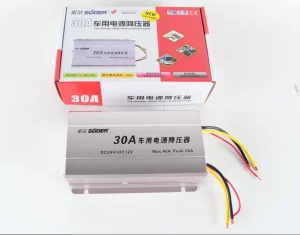
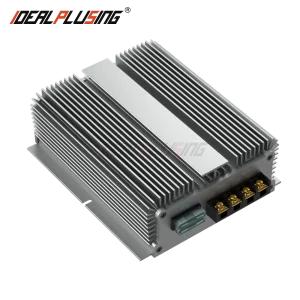
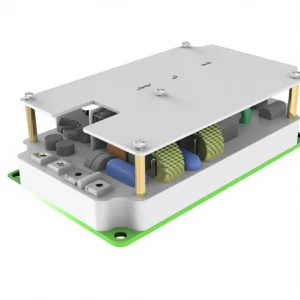
In heavy-duty mining machinery and electric transit buses, high-power DC-DC converters (such as 3kW onboard configurations) step down high traction battery voltages (e.g., 400V/800V) to standard 12V or 24V auxiliary outputs. These low-voltage outputs run advanced driver assistance systems (ADAS), steer-by-wire mechanics, diagnostic screens, and cabin climate controls.
The primary engineering hurdle here is vibration fatigue and thermal cycling. Our modules employ structural potting with high thermal conductivity compounds, protecting delicate board-mounted chips from mechanical shocks up to 20G and thermal shock ranges spanning -40°C to +105°C.
Marine environments expose electronics to persistent humidity, condensation, and salt mist. Watercraft electrical networks regularly experience transient voltage spikes when large auxiliary bilge pumps or winches power on and off.
Here, IP67 or IP69K sealed buck converters are standard requirements. These designs feature built-in reverse-polarity protection, transient voltage surge suppressors (TVS), and optical isolation barriers that prevent ground loops between engine start batteries and navigation electronics.
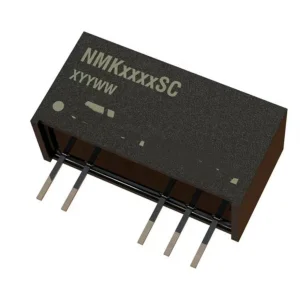
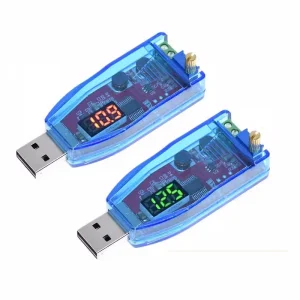
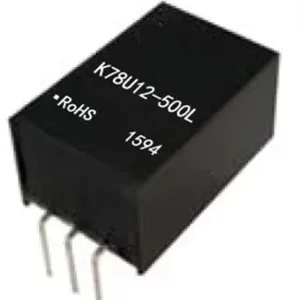
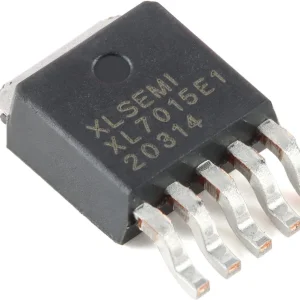
At the micro-level, control circuits on programmable logic controllers (PLCs) and robotic arms require tight regulation. Step-down converter modules (such as the LM2596 series or high-input XL7015 regulator ICs) step down fluctuating industrial rails (24V or 48V) to stable 5V, 3.3V, or adjustable rails. These outputs power microcontrollers, Ethernet transceivers, and telemetry modules.
The critical performance metric here is **low ripple noise**. Unmanaged switching ripple can compromise analog-to-digital converter (ADC) precision, introducing signal errors in automated factory assembly loops.
Expert answers addressing isolation barriers, thermal derating, and electromagnetic interference in DC-DC converters.
Isolated DC-DC converters utilize a high-frequency transformer to physically and electrically separate the input and output circuits (galvanic isolation). This isolation prevents high input voltages from reaching low-voltage output circuits in the event of an internal component failure. Additionally, it blocks ground loops, significantly reduces common-mode electrical noise, and allows the output to have a floating ground relative to the input.
As ambient temperatures increase, internal component losses (specifically conduction losses in MOSFETs and core losses in inductors) generate additional heat. If the system exceeds its nominal operating temperature (often +85°C), thermal derating must be applied to prevent damage. This involves reducing the allowable output power of the module. Systems with integrated liquid cooling plates minimize thermal derating, maintaining full power capability up to high coolant temperatures.
High-frequency switching in DC-DC converters generates conducted and radiated electromagnetic interference (EMI). Without adequate filtering, this EMI can disrupt onboard communications, such as AM/FM radio, GPS, and controller area networks (CAN buses). DCI Autos designs multi-stage LC input filters, utilizes metal shielding enclosures, and designs PCB layouts to minimize current loops. This process is validated in our dedicated anechoic testing chambers.
A step-down (Buck) converter decreases the input voltage to a lower output level by regulating the duty cycle of the switching transistor. Conversely, a step-up (Boost) converter utilizes energy stored in an inductor to generate an output voltage higher than the input. For applications requiring both stepping up and stepping down (such as battery charge/discharge cycles), a combined Buck-Boost topology is necessary to maintain a stable output voltage.
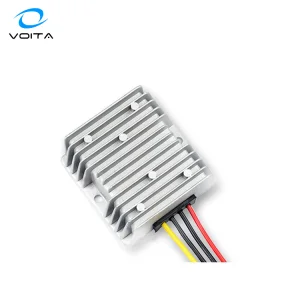
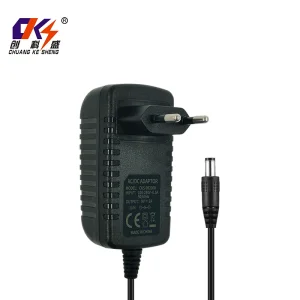
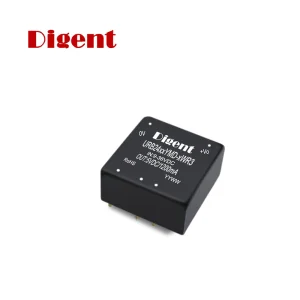
Browse our second selection of power converters, step-up/down regulators, and highly isolated industrial-grade modules.
 DCI Autos